

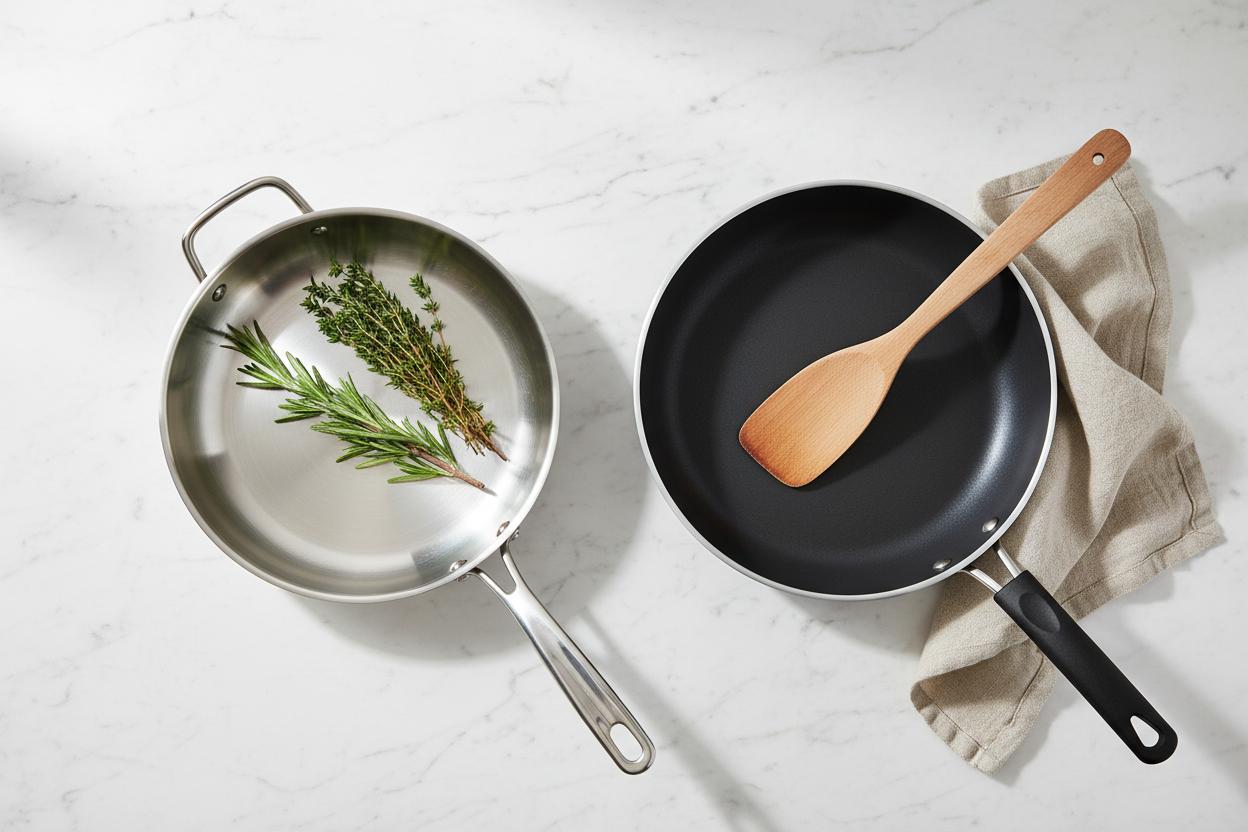
When shopping for new cookware, one of the biggest decisions you'll face is choosing between stainless steel and non-stick cookware. Both have their strengths, and the best choice depends on your cooking style, the types of meals you prepare, and how much maintenance you're willing to do.
In this guide, we'll compare stainless steel and non-stick cookware, covering performance, durability, maintenance, health considerations, and which option offers the best value for your kitchen.
What Is Stainless Steel Cookware?
Stainless steel cookware is made from a durable alloy of steel, chromium, and nickel. Many premium pots and pans feature an aluminium or copper core to improve heat distribution.
Professional chefs often choose stainless steel because it is durable, versatile, and suitable for high-temperature cooking.
Pros of Stainless Steel Cookware
- Extremely durable and resistant to scratches and dents
- Safe for high-heat cooking
- Ideal for searing meat and creating rich flavours
- Oven-safe (depending on the handles and lid)
- Compatible with induction, gas, electric, and ceramic cooktops
- Doesn't react with acidic foods like tomatoes or citrus
- Can last for decades with proper care
Cons of Stainless Steel Cookware
- Food can stick if not preheated correctly
- Requires more oil or butter than non-stick pans
- Cleaning may require a little more effort
- Usually more expensive than basic non-stick cookware
What Is Non-Stick Cookware?
Non-stick cookware has a special coating that prevents food from sticking to the cooking surface. It's designed to make cooking and cleaning easier, especially for delicate foods.
Modern non-stick pans are popular for everyday cooking because they require less oil and are simple to maintain.
Pros of Non-Stick Cookware
- Food releases easily
- Uses less cooking oil
- Perfect for eggs, pancakes, fish, and delicate foods
- Quick and easy to clean
- Great for beginner cooks
- Lightweight and easy to handle
Cons of Non-Stick Cookware
- Coating can wear out over time
- Not ideal for very high temperatures
- Metal utensils can damage the surface
- Usually has a shorter lifespan than stainless steel
- Often needs replacing after several years of regular use
Cooking Performance
Stainless Steel
Stainless steel excels at browning, caramelising, and searing. It creates a natural fond (the browned bits left in the pan) that can be turned into delicious sauces.
Best for: steak, chicken, pork, stir-fries, pan sauces, and sautéed vegetables.
Non-Stick
Non-stick cookware shines when cooking foods that tend to stick.
Best for: eggs, omelettes, pancakes, fish, crepes, and grilled sandwiches.
Durability
When it comes to longevity, stainless steel is the clear winner. A quality stainless steel cookware set can last 20 years or more with proper care. Non-stick cookware generally lasts between three and seven years, depending on quality, usage, and maintenance.
If you're looking for cookware that will stand the test of time, stainless steel is an excellent investment.
Ease of Cleaning
Non-stick cookware is easier to clean because food rarely sticks to the surface. Stainless steel may require soaking or gentle scrubbing after cooking, especially after high-heat searing. However, many stainless steel pots and pans are dishwasher-safe.
Health and Safety
Both stainless steel and modern non-stick cookware are considered safe when used according to the manufacturer's instructions.
To help extend the life of non-stick cookware:
- Avoid overheating empty pans
- Use wooden, silicone, or nylon utensils
- Avoid abrasive cleaning pads
- Replace cookware if the coating becomes heavily scratched or begins to peel
Stainless steel has no coating to wear away, making it a popular long-term choice for many home cooks.
Which Cookware Is Better?
The answer depends on how you cook.
Choose Stainless Steel If You:
- Love cooking meat
- Enjoy making sauces
- Want cookware that lasts for many years
- Frequently cook at high temperatures
- Prefer professional-quality cookware
Choose Non-Stick If You:
- Cook eggs regularly
- Want quick and easy cleanup
- Prefer low-fat cooking
- Are new to cooking
- Mainly prepare simple everyday meals
Why Many Home Cooks Own Both
Many experienced cooks keep both stainless steel and non-stick cookware in their kitchen because each serves a different purpose. For example:
- Use a stainless steel pan for steak or chicken
- Switch to a non-stick pan for eggs or pancakes
- Use stainless steel pots for soups and pasta
- Keep a non-stick frying pan for everyday breakfasts
This combination provides the versatility to cook almost any meal with the right tool.
Frequently Asked Questions
Is stainless steel healthier than non-stick?
Both are safe when used correctly. Stainless steel contains no cooking surface coating, while modern non-stick cookware should be used within the manufacturer's recommended temperature limits and replaced if the coating becomes damaged.
Can stainless steel be non-stick?
Yes. When preheated properly and used with a small amount of oil, stainless steel can become much less prone to sticking.
Which cookware lasts longer?
Stainless steel generally lasts much longer than non-stick cookware and can remain in excellent condition for decades.
Can I use metal utensils?
Metal utensils are usually suitable for stainless steel cookware but should be avoided on most non-stick surfaces, as they can damage the coating.
Final Thoughts
There isn't a one-size-fits-all answer in the stainless steel versus non-stick debate. Stainless steel offers exceptional durability, versatility, and professional cooking performance, while non-stick cookware provides convenience, effortless food release, and easy cleanup.
For many kitchens, the best solution is to own both. Use stainless steel when you need high-heat performance and long-lasting durability, and keep a quality non-stick pan on hand for delicate foods and quick everyday meals.
Whether you're upgrading your cookware or buying your first set, choosing the right pan for the right job will make cooking easier and more enjoyable.

