

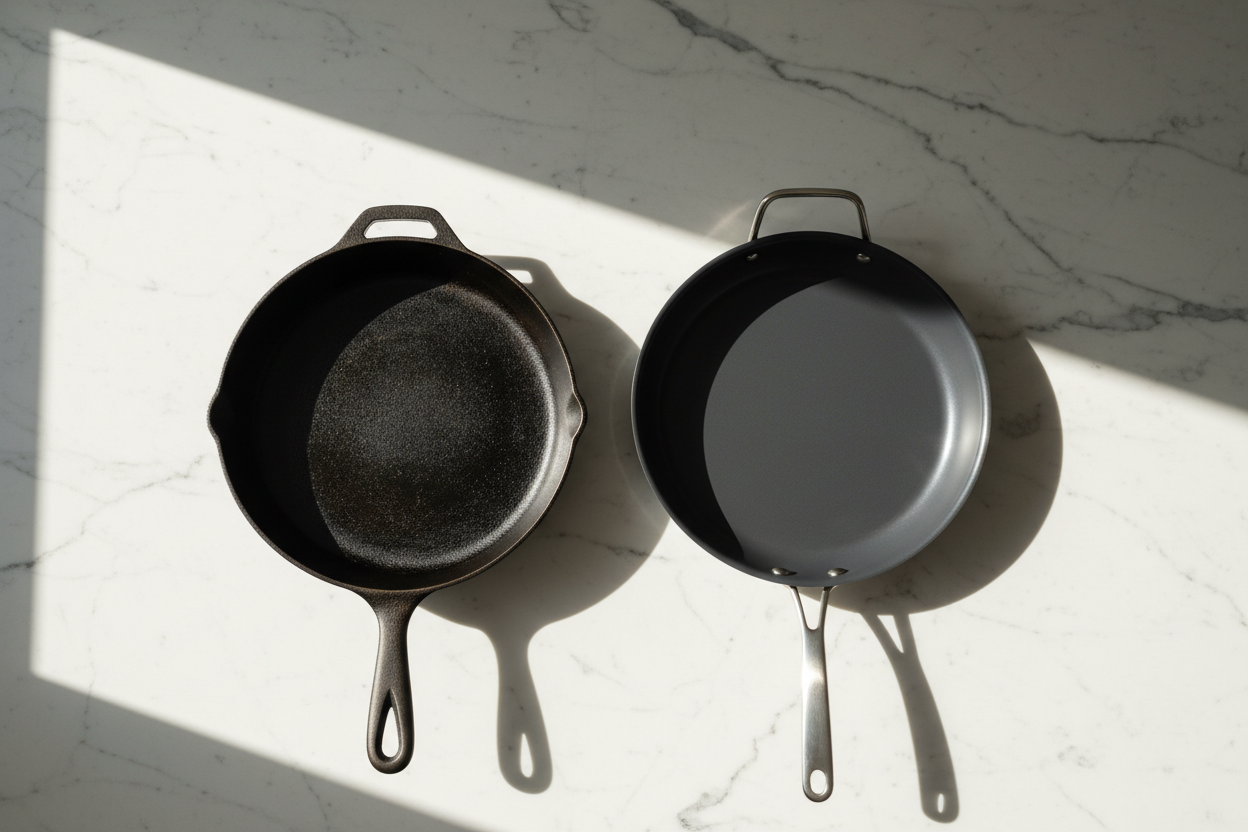
Cast Iron vs Carbon Steel Pans: Which One Should You Choose?
If you're looking for cookware that can last for decades, you've probably come across cast iron and carbon steel pans. Both are favourites among home cooks and professional chefs thanks to their excellent heat retention, durability, and versatility.
At first glance, they look quite similar, but they perform differently in the kitchen. Understanding the strengths of each can help you choose the right pan for your cooking style.
In this guide, we'll compare cast iron and carbon steel pans, looking at their construction, cooking performance, maintenance, durability, and the types of meals each is best suited for.
What Is a Cast Iron Pan?
Cast iron cookware is made by pouring molten iron into moulds, creating a thick, heavy pan that retains heat exceptionally well. Most cast iron pans are pre-seasoned with oil, creating a naturally non-stick surface that improves with use.
Cast iron has been a kitchen staple for generations because it's incredibly durable and can handle almost any cooking task.
Advantages of Cast Iron
- Outstanding heat retention
- Ideal for searing meat
- Naturally develops a non-stick surface with seasoning
- Suitable for stovetops, ovens, BBQs, and campfires
- Extremely durable and can last a lifetime
- Great for baking bread, cornbread, and desserts
Disadvantages of Cast Iron
- Heavy to lift and manoeuvre
- Takes longer to heat up
- Requires regular seasoning
- Can rust if not dried properly
- Not ideal for long cooking times with acidic foods
What Is a Carbon Steel Pan?
Carbon steel cookware is made from iron combined with a small amount of carbon. It's thinner and lighter than cast iron, making it easier to handle while still offering excellent cooking performance.
Like cast iron, carbon steel develops a natural non-stick surface through seasoning.
Many professional kitchens use carbon steel because it heats quickly, responds well to temperature changes, and is highly versatile.
Advantages of Carbon Steel
- Lightweight compared to cast iron
- Heats up quickly
- Excellent for high-heat cooking
- Naturally non-stick once seasoned
- Responsive to temperature adjustments
- Suitable for gas, induction, electric cooktops, and ovens
Disadvantages of Carbon Steel
- Requires seasoning and ongoing care
- Can rust if stored while damp
- Doesn't retain heat as long as cast iron
- May require several uses before achieving an effective non-stick surface
Cast Iron vs Carbon Steel: Side-by-Side Comparison
| Feature | Cast Iron | Carbon Steel |
|---|---|---|
| Weight | Heavy | Lighter |
| Heat Retention | Excellent | Very Good |
| Heating Speed | Slower | Faster |
| Temperature Control | Moderate | Excellent |
| Naturally Non-Stick | Yes (after seasoning) | Yes (after seasoning) |
| Durability | Excellent | Excellent |
| Maintenance | Moderate | Moderate |
| Best For | Searing, baking, slow cooking | Stir-frying, sautéing, everyday cooking |
Heat Performance
Cast Iron
Cast iron is known for its exceptional heat retention. Once it's hot, it stays hot, making it perfect for cooking thick steaks, burgers, and chops with a beautifully browned crust.
Because it holds heat so well, it's also excellent for baking and oven cooking.
Carbon Steel
Carbon steel heats much faster than cast iron and cools more quickly when you reduce the heat. This responsiveness gives you greater control, making it ideal for recipes that require frequent temperature adjustments.
Which Pan Is Better for Searing?
Both perform well, but they excel in different ways.
Cast iron provides intense, even heat that creates an excellent crust on steaks and chops.
Carbon steel also produces a great sear while allowing you to adjust the heat more quickly during cooking.
If maximum heat retention is your priority, cast iron has the edge.
Which Is Better for Everyday Cooking?
For daily use, many cooks prefer carbon steel.
Its lighter weight makes it easier to lift, toss ingredients, and move around the kitchen. It's particularly well suited for:
- Eggs
- Stir-fries
- Vegetables
- Chicken
- Fish
- Fried rice
Cast iron remains an excellent option for one-pan meals, roasting, and baking.
Seasoning and Maintenance
Both cast iron and carbon steel require seasoning.
Seasoning involves applying a thin layer of oil and heating the pan to create a protective coating. Over time, this coating improves the pan's cooking performance and helps prevent rust.
To keep either pan in great condition:
- Wash with warm water and a soft brush.
- Avoid soaking for long periods.
- Dry thoroughly immediately after washing.
- Apply a light coat of oil before storing.
- Store in a dry place.
With proper care, both types of cookware can last for decades.
Can You Cook Acidic Foods?
It's best to avoid cooking highly acidic foods such as tomato-based sauces, vinegar-heavy dishes, or citrus recipes for extended periods in newly seasoned cast iron or carbon steel pans.
Acidic ingredients can affect the seasoning layer and may alter the flavour of your food. Well-seasoned pans handle short cooking times better, but stainless steel is often the better choice for long-simmering acidic recipes.
Which Pan Lasts Longer?
Both are incredibly durable.
Unlike cookware with synthetic coatings, cast iron and carbon steel don't wear out in the traditional sense. If rust develops or the seasoning becomes damaged, the pan can usually be restored by removing the rust and re-seasoning the surface.
Many families pass cast iron cookware down through generations, while carbon steel pans are also known for their long service life.
Frequently Asked Questions
Is carbon steel better than cast iron?
Neither is universally better. Carbon steel is lighter and more responsive to temperature changes, while cast iron offers superior heat retention and excels at searing and baking.
Is carbon steel naturally non-stick?
Yes. Once properly seasoned and regularly used, carbon steel develops a naturally non-stick cooking surface.
Which pan is easier to maintain?
Both require similar care, including seasoning, thorough drying, and light oiling after cleaning. Carbon steel may need seasoning a little more frequently, especially when new.
Which is better for beginners?
If you want a pan that's easier to lift and quicker to heat, carbon steel is often more beginner-friendly. If your focus is on steaks, roasting, and baking, cast iron is a fantastic long-term investment.
Final Thoughts
Both cast iron and carbon steel deserve a place in a well-equipped kitchen. Cast iron shines when you need outstanding heat retention for searing, baking, or slow cooking, while carbon steel offers quicker heating, lighter handling, and greater control for everyday meals.
If you cook a wide variety of dishes, owning one of each gives you the flexibility to tackle almost any recipe with confidence. A cast iron pan is perfect for hearty, high-heat cooking, while a carbon steel pan is an excellent choice for fast, versatile meals you'll prepare day after day.
Whichever you choose, proper seasoning and care will reward you with cookware that performs beautifully and lasts for many years.

